
Ford Escape years to avoid and best years
Newer Ford Escape years have fewer owner complaints per year than the older ones. 2013 has the most complaints per year, at 130 (2,754 complaints). From 2018 on, complaints per year fall. Among years old enough to compare, the fewest complaints per year are 2023 at 20 (from 96 complaints), 2019 at 24 (from 586 complaints), and 2024 at 25 (from 76 complaints). The Ford Escape 2025 and 2026 model years are too early to compare: none has had 3 full years on the road yet. On the 2013 Ford Escape, 804 of 2,754 complaints name Engine.
Data as of .
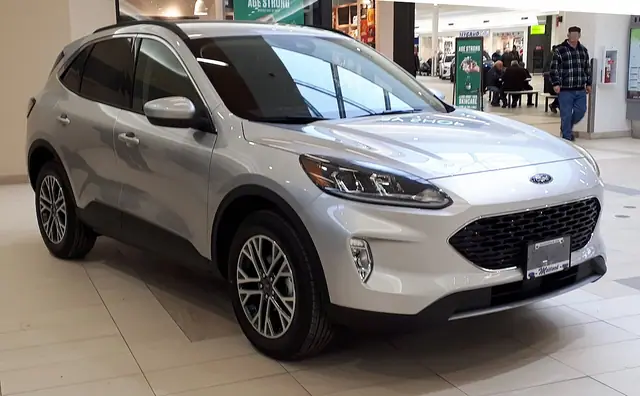
2023
2019
2024
2025–26
Ford Escape reliability by year
Each year is complaints filed in that year’s first 3 years on the road, divided by however many of those years have passed. A model year younger than 3 years is too early to compare, so it is left out of the years named as having the fewest or the most complaints. Recalls are a separate count. The numbers are for the US-market Ford Escape. How we count.
By model year
| Year | Per year on the road | Complaints | Recalls | Most-filed complaint | Avg. combined MPG |
|---|---|---|---|---|---|
| 2026 Too early | 3 | 3 | 2 | Engine, Fuel and propulsion system, Electrical system | 32.6 |
| 2025 → Too early | 12 | 23 | 9 | Engine and engine cooling | 33.7 |
| 2024 → Fewest | 25 | 76 | 8 | Electrical system | 32.4 |
| 2023 → Fewest | 20 | 96 | 11 | Electrical system | 33.7 |
| 2022 → | 33 | 231 | 19 | Fuel system, gasoline | 34.2 |
| 2021 → | 40 | 343 | 19 | Structure | 34.2 |
| 2020 → | 46 | 1,596 | 23 | Structure | 34.3 |
| 2019 → Fewest | 24 | 586 | 3 | Engine | 24.3 |
| 2018 → | 37 | 1,792 | 4 | Engine | 24.2 |
| 2017 → | 74 | 2,679 | 4 | Engine | 24.3 |
| 2016 → | 47 | 1,118 | 4 | Powertrain | 24.6 |
| 2015 → | 35 | 1,096 | 9 | Powertrain | 24.6 |
| 2014 → | 64 | 2,084 | 16 | Engine | 24.8 |
| 2013 → Most | 130 | 2,754 | 18 | Engine | 24.8 |
| 2012 → | 40 | 599 | 2 | Steering | 24.7 |
Years with a → link have a full model-year page.
What owners file about
Generations
- Body styles
- SUV
- Oil
- 5W-20 synthetic blend (2.5L I4 and 3.0L V6) · 5.3 qt capacity
- Tire size
- 235/70R16, 225/65R17 (trim dependent)
Known issues for this generation
NHTSA recall 16V-777 covered certain 2010-2012 Escape vehicles manufactured February 26, 2009 to April 29, 2012, and 2010-2011 Mercury Mariners, all built with the 3.0L engine, whose fuel delivery module may crack and cause a fuel leak. A fuel leak in the presence of an ignition source increases the risk of a fire. Dealers replaced the fuel delivery module flange with one that has a redesigned fuel supply port, free of charge; the campaign covered 329,265 vehicles.
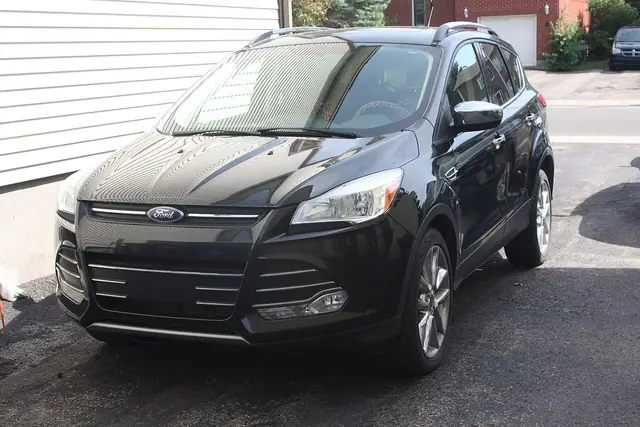

- Body styles
- SUV
- Oil
- 5W-20 synthetic (1.6L EcoBoost/2.5L I4); 5W-30 synthetic (2.0L EcoBoost) · 5.7 qt capacity
- Tire size
- 235/55R17 (S/SE) to 235/50R18 (SE/Titanium)
Known issues for this generation
Early third-gen years (especially 2013) also draw NHTSA powertrain filings about the shifter-cable bushing. Recall 18V-471 covers certain 2013-2014 Escapes with six-speed automatics: the bushing that attaches the shifter cable to the transmission may degrade and detach so the lever can show Park while the gearbox is not in Park, with no warning; dealers replace the bushing (Ford 18S20). Recall 22V-413 expands that bushing concern to certain 2013-2019 Escapes among other Ford models; dealers again replace the bushing. Separately, recall 17V-209 covered the 2014 Escape with the 1.6L GTDI: driving with low coolant could crack the cylinder head and leak oil onto hot parts, raising fire risk; dealers installed a coolant-level sensor. Recall 16V-643 covered 2013-2015 Escapes among about two million Ford/Lincoln vehicles for door-latch parts that may break so a door fails to latch or opens while moving; dealers replaced the latches.

- Body styles
- SUV
- Oil
- 5W-20 (1.5L EcoBoost); 5W-30 (2.0L EcoBoost); 0W-20 (2.5L hybrid/PHEV) synthetic · 5.4 qt capacity
- Tire size
- 225/65R17 (S/SE) to 225/55R19 (Titanium)
Known issues for this generation
NHTSA recall 24V-954 covers certain 2020-2024 Escape vehicles, together with 2021-2024 Lincoln Corsairs, for a manufacturing defect in one or more high-voltage battery cells that may result in an internal short circuit and battery failure. Battery failure can cause a loss of drive power and can also increase the risk of a fire. Owners are advised not to charge the battery until the remedy has been completed; dealers perform a battery energy control module software update and replace the high-voltage battery pack as necessary, free of charge. The campaign covers 20,484 vehicles.
Frequently asked questions
Which Ford Escape years have fewer owner complaints?
Among years old enough to compare, the fewest complaints per year are 2023 at 20 (from 96 complaints), 2019 at 24 (from 586 complaints), and 2024 at 25 (from 76 complaints).
Which Ford Escape year has the most owner complaints?
2013 has the most complaints per year, at 130 (2,754 complaints). On the 2013 Ford Escape, 804 of 2,754 complaints name Engine.
How do Ford Escape owner complaints compare by year?
Newer Ford Escape years have fewer owner complaints per year than the older ones. From 2018 on, complaints per year fall.
Which Ford Escape years are too early to compare?
The Ford Escape 2025 and 2026 model years are too early to compare: none has had 3 full years on the road yet.
What generation is my Ford Escape?
2008-2012 is the 2nd generation, 2013-2019 is the 3rd generation, and 2020-onward is the 4th generation.
Should I avoid charging my Ford Escape's high-voltage battery?
If your 2020-2024 Escape is covered by recall 24V-954, Ford advises not charging the high-voltage battery until the recall remedy has been completed.