
Hyundai Nexo years to avoid and best years
Newer Hyundai Nexo years have fewer owner complaints per year than the older ones. 2020 has the most complaints per year, at 1 (7 complaints). Among years old enough to compare, the fewest complaints per year are 2022 at 0 (from 1 complaint), 2019 at 0 (from 3 complaints), and 2021 at 1 (from 2 complaints). The Hyundai Nexo 2025 and 2026 model years are too early to compare: none has had 3 full years on the road yet. On the 2020 Hyundai Nexo, 1 of 7 complaints name Electrical system.
Data as of .
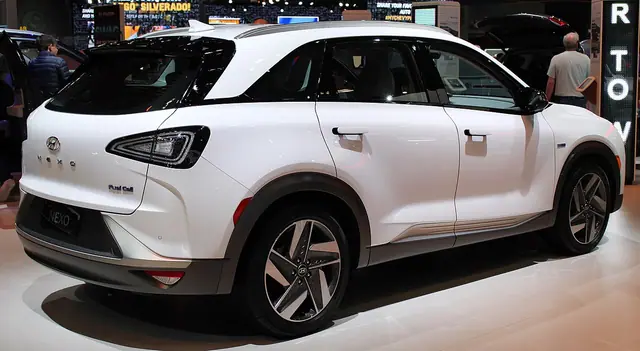
2022
2019
2021
2025–26
Hyundai Nexo reliability by year
Each year is complaints filed in that year’s first 3 years on the road, divided by however many of those years have passed. A model year younger than 3 years is too early to compare, so it is left out of the years named as having the fewest or the most complaints. Recalls are a separate count. The numbers are for the US-market Hyundai Nexo. How we count.
By model year
| Year | Per year on the road | Complaints | Recalls | Most-filed complaint | Avg. combined MPG |
|---|---|---|---|---|---|
| 2026 Too early | 0 | 0 | 0 | — | 64 |
| 2025 Too early | 0 | 0 | 0 | — | 59 |
| 2024 | 0 | 0 | 1 | — | 59 |
| 2023 | 1 | 6 | 1 | Fuel and propulsion system | 59 |
| 2022 Fewest | 0 | 1 | 1 | Fuel and propulsion system | 59 |
| 2021 Fewest | 1 | 2 | 2 | Electrical system, Engine, Forward collision avoidance | 59 |
| 2020 → Most | 1 | 7 | 4 | Electrical system | 59 |
| 2019 Fewest | 0 | 3 | 4 | Fuel and propulsion system | 59 |
Years with a → link have a full model-year page.
What owners file about
Generations
- Body styles
- SUV
- Tire size
- 225/60R17, 245/45R19 (trim-dependent)
Known issues for this generation
Recall 24V-761 covers certain 2019-2024 Hyundai Nexo vehicles: the thermally activated pressure relief device (TPRD) may break and cause a hydrogen gas leak, which can result in a fire while parked. Owners are advised to park outside and away from structures until the remedy is completed. Dealers replace the TPRD.
Frequently asked questions
Which Hyundai Nexo years have fewer owner complaints?
Among years old enough to compare, the fewest complaints per year are 2022 at 0 (from 1 complaint), 2019 at 0 (from 3 complaints), and 2021 at 1 (from 2 complaints).
Which Hyundai Nexo year has the most owner complaints?
2020 has the most complaints per year, at 1 (7 complaints). On the 2020 Hyundai Nexo, 1 of 7 complaints name Electrical system.
How do Hyundai Nexo owner complaints compare by year?
Newer Hyundai Nexo years have fewer owner complaints per year than the older ones.
Which Hyundai Nexo years are too early to compare?
The Hyundai Nexo 2025 and 2026 model years are too early to compare: none has had 3 full years on the road yet.
Does the Hyundai Nexo use engine oil?
US models are battery-electric; there is no engine oil change. Follow the owner manual for coolant, brake fluid, and other EV service items.
What tire sizes fit a US Hyundai Nexo?
Common US fitments include front size 225/60R17, 245/45R19 (trim-dependent); sizes vary by trim—confirm on the door jamb placard.
What NHTSA recalls affect the US Hyundai Nexo?
Recall 24V-761 covers certain 2019-2024 Hyundai Nexo vehicles: the thermally activated pressure relief device (TPRD) may break and cause a hydrogen gas leak, which can result in a fire while parked. Owners are advised to park outside and away from structures until the remedy is completed. Dealers replace the TPRD.