
2014 Dodge Challenger reliability

Is it reliable?

The 2014 Dodge Challenger has 149 complaints with NHTSA after 13 years, or 14 per year. That is more complaints per year than most Challenger years here — over the median of the other years, which is 10. NHTSA has 5 recalls on file, including Inflator, Transmission control module, and Alternator.

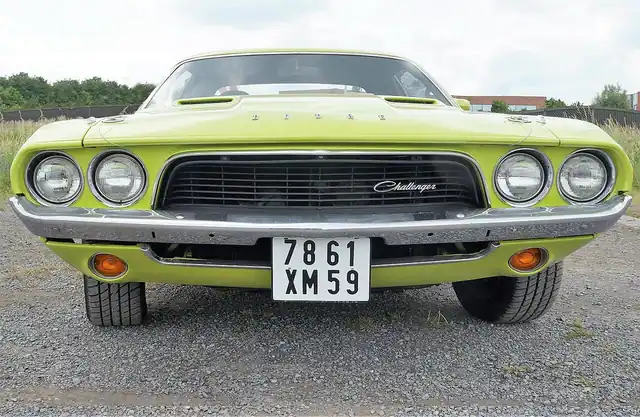
2012 Dodge Challenger
Photo by Pierre André Leclercq, resized from the original. Wikimedia Commons CC BY-SA 4.0
Complaints

149

Per year

14

Recalls

5

Years on the road

13

What owners report

The complaints owners file most often name Electrical system (62 of 149), then Engine (36) and Steering (20). Those filings include 16 that report a crash, 5 that report a fire, and 13 that report an injury.

Next to 2013 and 2015

The 2013 Challenger has 179 complaints, 20 per year, and the 2015 has 126 complaints, 15 per year. The 2014 has fewer complaints per year than the 2013. The 2014 has about the same number of complaints per year as the 2015.

The complaint rate is complaints filed in this year’s first 3 years on the road, divided by however many of those years have passed. Recalls are a separate count. The numbers are for the US-market 2014 Dodge Challenger. How we count. Data as of .

Recalls (5)

Recall air bags, frontal, passenger side, inflator 2019-01-15 · NHTSA campaign 19V018000
Summary Chrysler (FCA US LLC) is recalling certain 2010 Dodge Ram 3500, Ram 4500/5500, 2010-2011 Dodge Dakota, 2010-2014 Dodge Challenger, 2010-2015 Dodge Challenger, Chrysler 300, and 2010-2016 Jeep Wrangler vehicles. Upon deployment of the driver's frontal air bag, excessive internal pressure may cause the inflator to explode.
Remedy Owners are advised not to drive their vehicle until the recall repair is complete. Chrysler will notify owners, and dealers will replace the passenger frontal air bag inflator, free of charge. The recall began February 4, 2019. Owners may contact Chrysler customer service at 1-800-853-1403. Chrysler's number for this recall is V01.
Recall powertrain, automatic transmission, transmission control module 2018-07-12 · NHTSA campaign 18E053000
Summary Chrysler (FCA US LLC) is recalling certain Mopar Stage 1 Kit Performance Packages Powertrain Control Modules (PCM) Part Numbers P5160023, P5160025, and Demon Crate PCM Part Number 68412287AA. The PCMs are being recalled to address a defect that could prevent the cruise control system from disengaging. If, when using cruise control, there is a short circuit within the vehicle's wiring, the driver may not be able to shut off the cruise control either by depressing the brake pedal or manually turning the system off once it has been engaged, resulting in either the vehicle maintaining its current speed or possibly accelerating.
Remedy Chrysler will notify owners, and dealers will either perform a software update or replace the PCM, free of charge. The recall began July 26 , 2018. Owners may contact Chrysler customer service at 1-800-853-1403. Chrysler's number for this recall is U82, and U83.
Recall electrical system, alternator 2017-11-21 · NHTSA campaign 17V741000
Summary Chrysler (FCA US LLC) is recalling certain 2014 Dodge Challenger, Charger, Durango, Chrysler 300, and Jeep Grand Cherokee vehicles equipped with a 3.6L engine and a 160 amp alternator. In the affected vehicles, the alternator may suddenly fail.
Remedy Chrysler will notify owners, and dealers will replace the alternator, free of charge. The recall began December 15, 2018. Owners may contact Chrysler customer service at 1-800-853-1403. Chrysler's number for this recall is T75.
Recall electrical system, alternator 2017-07-10 · NHTSA campaign 17V435000
Summary Chrysler (FCA US LLC) is recalling certain model year 2011-2014 Dodge Challenger, Dodge Charger, Chrysler 300, Dodge Durango, and 2012-2014 Jeep Grand Cherokee vehicles. The affected vehicles have electro-hydraulic power steering (EHPS) and are equipped with a 5.7L or a 3.6L engine and a 160, 180 or 220 amp alternator. In the affected vehicles, the alternator may suddenly fail.
Remedy Chrysler will notify owners, and dealers will inspect the alternator and depending on the part number, will replace the alternator, if necessary, free of charge. The recall began February 12, 2018. Owners may contact Chrysler customer service at 1-800-853-1403. Chrysler's number for this recall is T36.
Recall electrical system, alternator 2014-10-08 · NHTSA campaign 14V634000
Summary Chrysler Group LLC (Chrysler) is recalling certain model year 2011-2014 Chrysler 300, Dodge Charger, Challenger, and Durango; and 2012-2014 Jeep Grand Cherokee vehicles manufactured April 22, 2010, to January 2, 2014, and equipped with a 3.6L engine and a 160 amp alternator. In the affected vehicles, the alternator may suddenly fail.
Remedy Chrysler has notified owners, and dealers will replace the alternator, free of charge. The recall began on February 27, 2015. Owners may contact Chrysler customer service at 1-800-853-1403. Chrysler's number for this recall is P60.

Complaints by component (149 total)

Electrical system
62
Engine
36
Steering
20
Air bags
18
Fuel and propulsion system
14
Powertrain
12
Service brakes
7
Exterior lighting
5
Seats
5
Speed control
5
Wheels
4
Electronic stability control (ESC)
3
Structure
3
Engine and engine cooling
2
Tires
2
Visibility
2
Air brakes
1
Interior lighting
1
Latches, locks, and linkages
1
Suspension
1
Traction control
1
Show 13 more Show less
Crash-flagged

16

Fire-flagged

5

Injury reports

13

Death reports

0

Complaints filed per year

14201424201552016182017192018192019222020820214202252023320243202552026
Excerpts from recent NHTSA complaint filings
  • "The contact owns a 2014 Dodge Challenger. The contact stated that while driving 50 MPH, the vehicle lost motive power, the check engine warning light illuminated, and an abnormal burning odor was coming from the…"
    Electrical system · filed 2026-09-14
  • "Totally Integrated Power Module (TIPM) I have two children and the vehicle has left me stranded about a dozen times because it will not even start. Upon research, this faulty part can also cause the vehicle to just…"
    Electrical system · filed 2026-08-27
  • "The manufacturer's label under the hood states only add 134y refrigerant to the cooling system but the service port is not the correct size. I bought an adapter and added the 134a refrigerant and my cars cooling system…"
    Unknown or other · filed 2026-08-19
  • ": The vehicle’s steering wheel intermittently hardens or "locks" while in motion, making it extremely difficult to maneuver and creating a severe safety hazard. This issue remains unresolved despite two separate…"
    Steering, Electrical system · filed 2026-04-29
  • "Subject VIN sits in database as completed for Takata Airbag replacement completion during previous Passenger Air Bag NHTSA Recall; however, recent "Do Not Drive" warnings that include this year model now state that…"
    Air bags · filed 2026-02-20

Fuel economy

Trim Engine Transmission Drive City Hwy Combined Annual fuel cost
Challenger 3.6L, 6-cyl Automatic 5-speed Rear-wheel drive 18 27 21 MPG $3500
Challenger 5.7L, 8-cyl Automatic 5-speed Rear-wheel drive 15 24 18 MPG $4100
Challenger 5.7L, 8-cyl Manual 6-speed Rear-wheel drive 15 23 18 MPG $4450
Challenger SRT8 6.4L, 8-cyl Automatic 5-speed Rear-wheel drive 14 23 17 MPG $4700
Challenger SRT8 6.4L, 8-cyl Manual 6-speed Rear-wheel drive 14 23 17 MPG $4700

Specs and fitment

LC generation (3rd gen), 2012–2023
Body styles Coupe
Oil 5W-20 full synthetic (3.6L V6; Hemi V8 uses 5W-20 or 0W-40 per manual) , 7 qt capacity
Tire size 245/45R20 (many trims); staggered setups on wide-body and Hellcat models front / 245/45R20 (many trims); wider rear tires on staggered Hellcat and wide-body trims rear

Known issues for this generation

Recall 18V-280 covers certain 2018 Dodge Challenger, Charger, and Durango, Chrysler 300, Jeep Grand Cherokee and Wrangler, and Ram 1500 vehicles: an incorrect transmission park lock rod may allow the vehicle to move even when the shifter indicates Park. Dealers inspect and replace the park lock rod if needed. Recall 19V-203 covers certain 2019 Dodge Challenger, Charger, and Chrysler 300 vehicles whose instrument cluster may not properly illuminate driver warnings; dealers update the instrument cluster software.

Compare

Frequently asked questions

Is the 2014 Dodge Challenger reliable?

The 2014 Dodge Challenger has 149 complaints with NHTSA after 13 years, or 14 per year. That is more complaints per year than most Challenger years here — over the median of the other years, which is 10. NHTSA has 5 recalls on file, including Inflator, Transmission control module, and Alternator.

What are common problems with a 2014 Dodge Challenger?

The complaints owners file most often name Electrical system (62 of 149), then Engine (36) and Steering (20). Those filings include 16 that report a crash, 5 that report a fire, and 13 that report an injury.

Is the 2014 Dodge Challenger more reliable than the years next to it?

The 2013 Challenger has 179 complaints, 20 per year, and the 2015 has 126 complaints, 15 per year. The 2014 has fewer complaints per year than the 2013. The 2014 has about the same number of complaints per year as the 2015.

Has the 2014 Dodge Challenger been recalled?

The 2014 Dodge Challenger has 5 recalls on file with NHTSA. See the recalls table on this page for dates, components, and remedies.

How many complaints have owners filed about the 2014 Dodge Challenger?

Owners have filed 149 complaints about the 2014 Dodge Challenger with NHTSA.

What mpg does a 2014 Dodge Challenger get?

EPA-rated combined fuel economy for the 2014 Dodge Challenger is 18.2 MPG. See the fuel economy table on this page for city and highway figures by engine and transmission.

When did Dodge stop making the Challenger?

The LC Challenger was built through the 2023 model year for the US market.

What oil does a Dodge Challenger with the 3.6L V6 take?

US notes list 5W-20 full synthetic for the 3.6L V6; Hemi V8 grades can differ (5W-20 or 0W-40 per the manual).

What tire sizes does a Dodge Challenger use?

Many trims list 245/45R20; wide-body and Hellcat models use staggered setups that differ front to rear.