
Chevrolet Bolt EV years to avoid and best years
Newer Chevrolet Bolt EV years have more owner complaints per year than the older ones. 2019 has the most complaints per year, at 34 (178 complaints). 2019 through 2021 are in that same range. Among years old enough to compare, the fewest complaints per year are 2018 at 0 (from 1 complaint), 2017 at 0 (from 4 complaints), and 2023 at 13 (from 60 complaints). On the 2019 Chevrolet Bolt EV, 49 of 178 complaints name Electrical system.
Data as of .
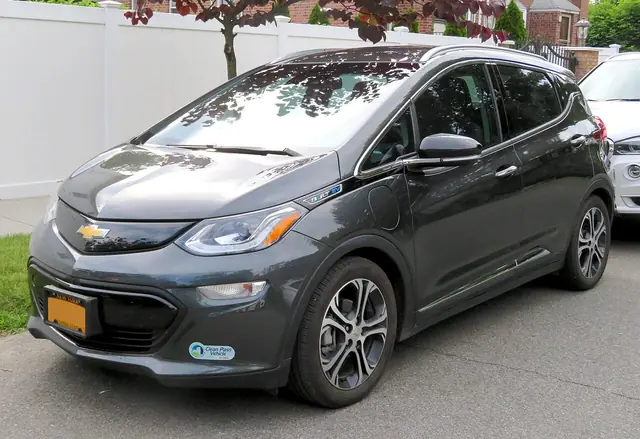
Chevrolet Bolt EV reliability by year
Each year is complaints filed in that year’s first 3 years on the road, divided by however many of those years have passed. A model year younger than 3 years is too early to compare, so it is left out of the years named as having the fewest or the most complaints. Recalls are a separate count. The numbers are for the US-market Chevrolet Bolt EV. How we count.
By model year
| Year | Per year on the road | Complaints | Recalls | Most-filed complaint | Avg. combined MPG |
|---|---|---|---|---|---|
| 2023 → Fewest | 13 | 60 | 3 | Steering | 120 |
| 2022 → | 17 | 59 | 7 | Electrical system | 120 |
| 2021 → | 18 | 67 | 5 | Electrical system | 118 |
| 2020 → | 23 | 173 | 8 | Electrical system | 118 |
| 2019 → Most | 34 | 178 | 6 | Electrical system | 119 |
| 2018 Fewest | 0 | 1 | 5 | Steering | 119 |
| 2017 Fewest | 0 | 4 | 4 | Steering | 119 |
Years with a → link have a full model-year page.
What owners file about
Generations
- Body styles
- Hatchback
- Tire size
- 215/50R17
Known issues for this generation
Recall 21V-650 covers certain 2020-2022 Chevrolet Bolt EV and 2022 Bolt EUV vehicles: the high-voltage battery could catch fire when charged to full or nearly full capacity; GM's remedy includes battery module replacement and advanced diagnostic software. Earlier recall 20V-701 and 21V-560 addressed the same battery fire risk on 2017-2019 and previously repaired packs. Follow-up recalls 24V-481 and 24V-812 address failures in installing that diagnostic software on some vehicles already remedied under 21V-650. Recall 22V-930 covers certain 2017-2023 Bolt EV vehicles: after a crash with seat belt pretensioner deployment, pretensioner exhaust may ignite carpet fibers near the B-pillar.
Frequently asked questions
Which Chevrolet Bolt EV years have fewer owner complaints?
Among years old enough to compare, the fewest complaints per year are 2018 at 0 (from 1 complaint), 2017 at 0 (from 4 complaints), and 2023 at 13 (from 60 complaints).
Which Chevrolet Bolt EV year has the most owner complaints?
2019 has the most complaints per year, at 34 (178 complaints). 2019 through 2021 are in that same range. On the 2019 Chevrolet Bolt EV, 49 of 178 complaints name Electrical system.
How do Chevrolet Bolt EV owner complaints compare by year?
Newer Chevrolet Bolt EV years have more owner complaints per year than the older ones.
Does the Chevrolet Bolt EV use engine oil?
No. It is battery-electric; routine fluid checks focus on brake fluid and coolant loops, not motor oil.
What tire size does a Chevrolet Bolt EV use?
US first-generation pages list 215/50R17.
What model years does the first-generation Chevrolet Bolt EV cover?
2017-2023 on this site's Bolt EV record.