
2016 Nissan Versa reliability
NHTSA's file on the 2016 Nissan Versa holds 80 complaints after 11 years, a rate of 11 per year. Versa years here cluster close together — the other years’ median is 11 complaints per year. NHTSA has no recalls on file for this model year.
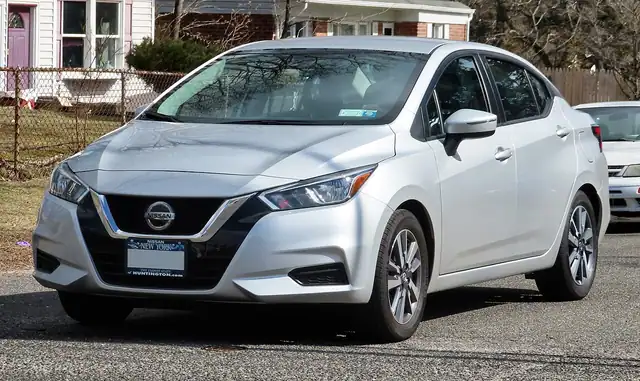

80
11
0
11
The complaints owners file most often name Air bags (21 of 80), then Powertrain (20) and Engine (10). Those filings include 13 that report a crash, 1 that reports a fire, 12 that report an injury, and 1 that reports a death.
The 2015 Versa has 168 complaints, 21 per year, and the 2017 has 62 complaints, 9 per year. The 2016 has fewer complaints per year than the 2015. The 2016 has more complaints per year than the 2017.
The complaint rate is complaints filed in this year’s first 3 years on the road, divided by however many of those years have passed. Recalls are a separate count. The numbers are for the US-market 2016 Nissan Versa. How we count. Data as of .
Recalls (0)
No recalls on file with NHTSA for this model year.
Complaints by component (80 total)
Show 9 more Show less
13
1
12
1
Complaints filed per year
Excerpts from recent NHTSA complaint filings
-
"In July 2024 my airbag light came for no apparent reason. I took it to Nissan Service-they got it off with no guarantee it would stay off and said the airbag would have to be replaced if it came on again. In came on…"
-
"0 The vehicle has a CVT transmission failure causing severe shuddering, jerking, and progressive loss of acceleration. Initially the vehicle would not exceed 20 mph, then worsened to 15 mph, then 10 mph, and now will…"
-
"While merging onto [XXX] toward [XXX] , my 2016 Nissan Versa suffered a total loss of power while crossing active railroad tracks. The car stuttered and jerked before completely stalling and stopped responding. I was…"
-
"The vehicle has a CVT transmission failure causing severe shuddering, jerking, and progressive loss of acceleration. Initially the vehicle would not exceed 20 mph, then worsened to 15 mph, then 10 mph, and now will not…"
-
"There is a shutter leaving 1st gear"
NHTSA crash ratings
| Version | Overall | Front | Side | Rollover |
|---|---|---|---|---|
| 2016 Nissan Versa 4 DR FWD | 4 stars | 4 stars | 4 stars | 4 stars |
Stars are how this vehicle did in NHTSA crash tests. They are a safety result, separate from the complaint record. Not rated means that test was not run for this version.
Fuel economy
| Trim | Engine | Transmission | Drive | City | Hwy | Combined | Annual fuel cost |
|---|---|---|---|---|---|---|---|
| Versa | 1.6L, 4-cyl | Automatic (variable gear ratios) | Front-wheel drive | 31 | 39 | 34 MPG | $1900 |
| Versa | 1.6L, 4-cyl | Automatic 4-speed | Front-wheel drive | 26 | 35 | 29 MPG | $2250 |
| Versa | 1.6L, 4-cyl | Manual 5-speed | Front-wheel drive | 27 | 36 | 30 MPG | $2150 |
Specs and fitment
Known issues for this generation
NHTSA safety recall 15V-507 covers certain 2012-2015 Nissan Versa sedan vehicles (and 2014-2015 Versa Note vehicles in the same campaign). The center console trim panel may catch the driver's shoe and delay moving from the accelerator to the brake pedal, which lengthens stopping distance and increases crash risk. Remedy: dealers modify the console trim panel free of charge. When NHTSA lists Versa sedan and Versa Note together, the published unit count is shared across both.
Compare
Frequently asked questions
Is the 2016 Nissan Versa reliable?
NHTSA's file on the 2016 Nissan Versa holds 80 complaints after 11 years, a rate of 11 per year. Versa years here cluster close together — the other years’ median is 11 complaints per year. NHTSA has no recalls on file for this model year.
What are common problems with a 2016 Nissan Versa?
The complaints owners file most often name Air bags (21 of 80), then Powertrain (20) and Engine (10). Those filings include 13 that report a crash, 1 that reports a fire, 12 that report an injury, and 1 that reports a death.
Is the 2016 Nissan Versa more reliable than the years next to it?
The 2015 Versa has 168 complaints, 21 per year, and the 2017 has 62 complaints, 9 per year. The 2016 has fewer complaints per year than the 2015. The 2016 has more complaints per year than the 2017.
Has the 2016 Nissan Versa been recalled?
NHTSA has no recalls on file for the 2016 Nissan Versa.
How many complaints have owners filed about the 2016 Nissan Versa?
Owners have filed 80 complaints about the 2016 Nissan Versa with NHTSA.
What mpg does a 2016 Nissan Versa get?
EPA-rated combined fuel economy for the 2016 Nissan Versa is 31 MPG. See the fuel economy table on this page for city and highway figures by engine and transmission.
What oil does a Nissan Versa take?
N17 (2012-2019) manuals list SAE 5W-30 with the API Certification Mark. N18 (2020-on) lists 0W-20 full synthetic (ILSAC GF-5). Confirm the filler-cap grade for your year.
What tire size does a Nissan Versa use?
N17 sedans commonly use 185/65R15. N18 sedans list 195/65R15, 205/55R16, and 205/50R17 depending on trim.
What does NHTSA recall 15V-507 cover on early Versas?
Certain 2012-2015 Versa sedans (and 2014-2015 Versa Note in the same campaign): the center console trim may catch the driver’s shoe and delay moving from accelerator to brake.